Join our student community on Discord - Click here

Sign In
Welcome to Bypass AI! Sign in to continue your exploration of our platform with all its exciting features.

Forgot Password?
Don’t have an account ? Sign up
Sign Up
Embrace the Future with Bypass AI! Sign up now and let's rewrite the possibilities together.
You have an account ? Sign In
Enter OTP
We’ll send you an OTP on your registered email address
Back to Login
Forgot Password
We'll Send You An Email To Reset Your Password.
Back to Login
Enter OTP
We'll send you an email to reset your password.
Back to Login
Confirm Password
Please enter your new password.
 BypassAI
 23 Dec, 2025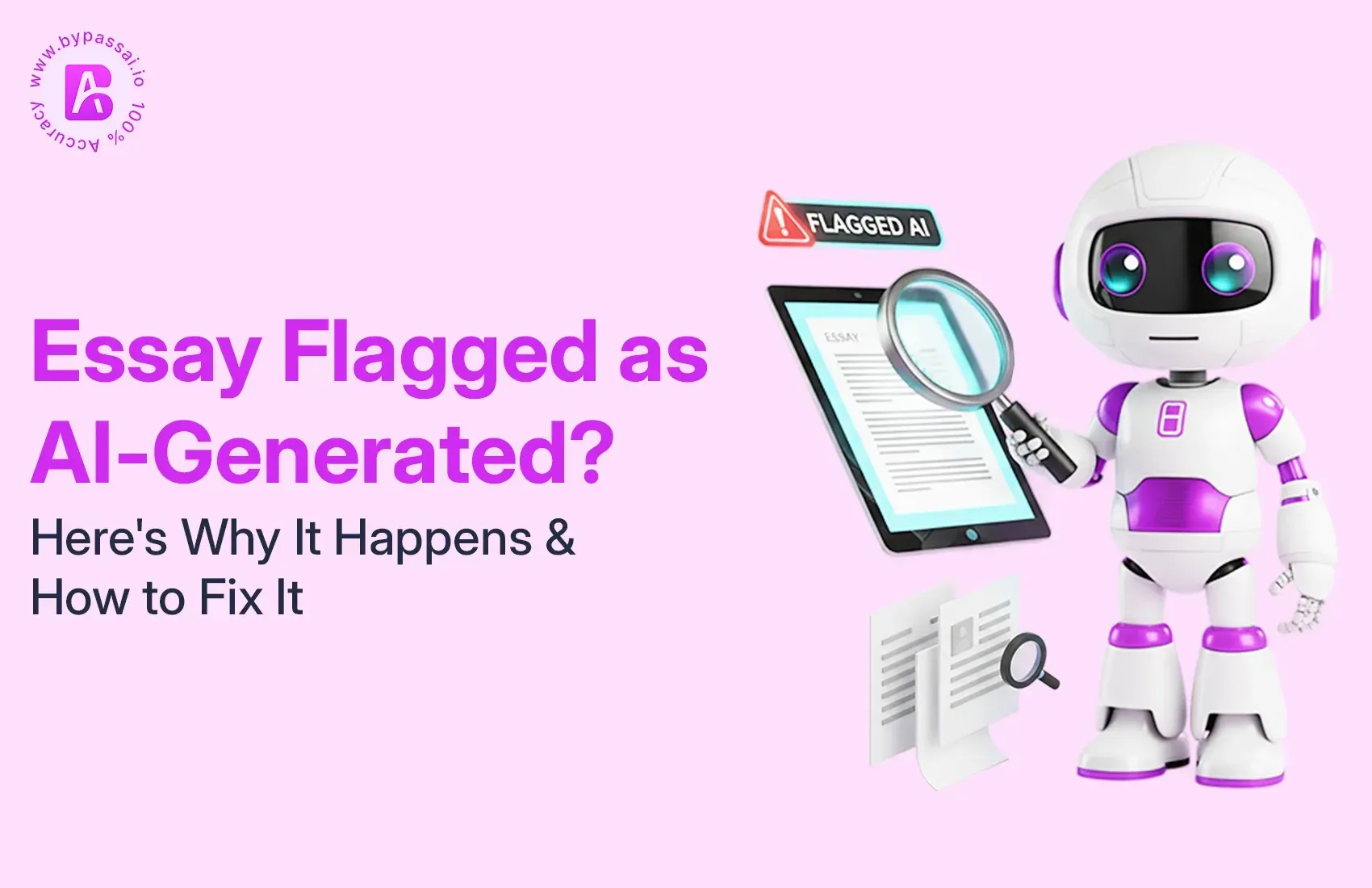
TABLE OF CONTENTS
Quick Answer: Why Essays Get Flagged
What This Guide Covers
Understanding AI Detection: How It Works
The False Positive Problem: When Human Writing Gets Flagged
Common Reasons Your Essay Was Detected as AI
6 Actionable Tips: How to Not Get Detected by AI
What To Do If My Essay Is Detected as AI
Understanding AI Detection Tools: Accuracy & Limitations
How to Humanize AI Text Free
The Right Way to Use AI Writing Assistants
Bypass AI: Your Solution for Natural-Sounding Content
Conclusion
FAQs
Imagine one of the situations, You have invested so much time researching, writing, and editing your essay. Your ideas are there on the paper, all references have been validated, and each part has been made better. But then, after submitting your work, an email from your lecturer comes saying, "My essay is detected as AI." You feel very disappointed. How is it possible when you have put in all the effort writing it all by yourself?
Quick Answer: Why Essays Get Flagged
AI detectors identify compositions by their writing patterns, such as predictable vocabulary, uniformity in sentence structures, and the use of language that repeats AI outputs, which are all characteristics of the text by AI. However, these devices are imperfect and often give false positives, particularly among non-native English speakers, learners using the highly formal academic language, and people who depend on grammar correction tools like Grammarly extensively.
What This Guide Covers
In this Guide, you will be taken step by step through the entire process of understanding AI detection in academic writing. You will get an insight into the operation of these tools, the reason for high frequency of false positives, and the factors that make your text appear "AI-like" to the detectors.
Most importantly, you will gain practical knowledge on how to avoid AI detection while creating honest and original content that reflects your authentic voice.
Understanding AI Detection: How It Works
AI detection involves analyzing patterns that cover structure, consistency, and word choice. Understanding how AI detectors analyze text patterns helps you recognize what triggers these tools and how to write in ways that better represent human authorship.
What Are AI Detectors?
AI detectors (occasionally incorrectly spelled Ai checker in alarmed Google searches) are computer applications that check the text and provide an estimate of its likely authorship by either a human or AI. In academic contexts, the following tools are most often employed:
- Bypass AI: The reputed plagiarism detection system that integrated AI spotting features in 2025.
- AssignmentGPT AI: Developed solely for identifying AI text, it gained fame as a teacher's tool.
- AI Checker: Directed to authors and publishers as a solution.
- ZeroGPT: A no-cost tool that is mainly used by students for testing their writings beforehand.
- Copyleaks: A complete monitoring system parallel to Turnitin that is also adopted by academic institutions.
- Winston AI: A startup among universities that is widely accepted for its claims of accuracy
The presence of these tools in the educational sector has been widespread to such an extent that many colleges and universities using AI detectors now scan every submitted essay before professors review them. Understanding how these institutions implement detection tools is crucial for navigating academic integrity policies.
Key Metrics Detectors Use
Some of the key metrics where every AI detector can check the following criteria :
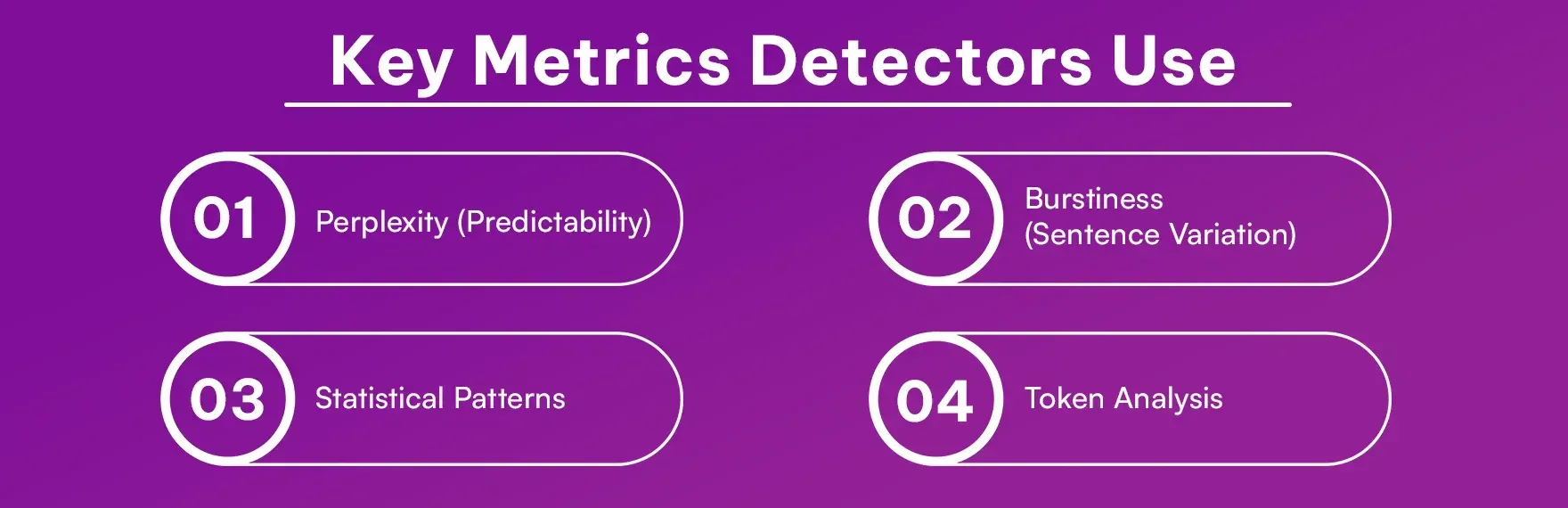
- Perplexity (Predictability): This indicates the level of surprise or unpredictability in your word selection. The text produced by AI usually resorts to the next word with the highest statistical probability, making it extremely predictable.
- Burstiness (Sentence Variation): This analyzes the fluctuation in the length and complexity of sentences across the text. People write in a "burst" style with a mixture of short, concise sentences followed by longer and more complex ones.
- Statistical Patterns: Detectors perform comparisons of your text to large databases containing AI-generated and human-written texts by searching for the statistical similarities in vocabulary, syntax, and structure.
- Token Analysis: AI models operate with "tokens" (segments of text), and sometimes the detectors are able to recognize the patterns of tokens' combinations which indicate that AI has generated the content.
Why AI Detection Isn't 100% Accurate
The uncomfortable truth that many teachers do not grasp is that AI detection is at its core a probabilistic tool, not a certainty one. The detection systems only give a percentage chance that the text was AI-produced, not a decisive yes-or-no verdict. Research into the accuracy of Turnitin's AI detector reveals significant error margins and highlights why these tools should be used with caution rather than as definitive proof.
The False Positive Problem: When Human Writing Gets Flagged
The issue of false positives arises when texts created by humans are wrongly identified as AI-written. This commonly occurs when the specific characteristics of certain styles, patterns or structures are found similar to those of AI tools.
What Is a False Positive in AI Detection?
When an AI detector calls a human text AI-generated wrongly, it is a false positive. This is the worst case for students who are accused of cheating even though they did not do anything wrong. It prompts the students that really wrote their own work to desperately search for "my essay is detected as AI.
How Common Are False Positives?
A study from Stanford University indicated that AI detectors were biased against non-native speakers of English, misclassifying their writing as AI-produced with a much higher frequency. According to one particular research, papers composed by non-native writers were indicated as AI-generated 61.3% of the time, whereas for native speakers it was only 11.7%.
Groups Most Affected
Non-Native English Speakers: The dilemma surrounding the detection of AI in essay writing concerns a specific group of students who write in their second or third language. These students tend to employ more formal and structured language, which is the one they picked up in the textbooks.
Those Who Use Grammar-Checking Tools: The extensive application of Grammarly, Microsoft Editor, or alike tools may result in writing that is more uniform and correct, and at the same time, to some extent, more AI-like. Such applications eliminate the natural errors that are distinguishing markers of human authorship.
Real Examples and Case Studies
Yasmin, a student at UC Davis, got in trouble for using AI in an essay about her immigration experience. Even after she presented drafts that demonstrated her writing style, she had to suffer through a formal academic integrity investigation that was weeks long and very stressful.
Common Reasons Your Essay Was Detected as AI
The initial move to stop your essay being identified as AI is to understand the reason behind such a detection. The following are the usual reasons for an AI checker to mark your article as unoriginal:
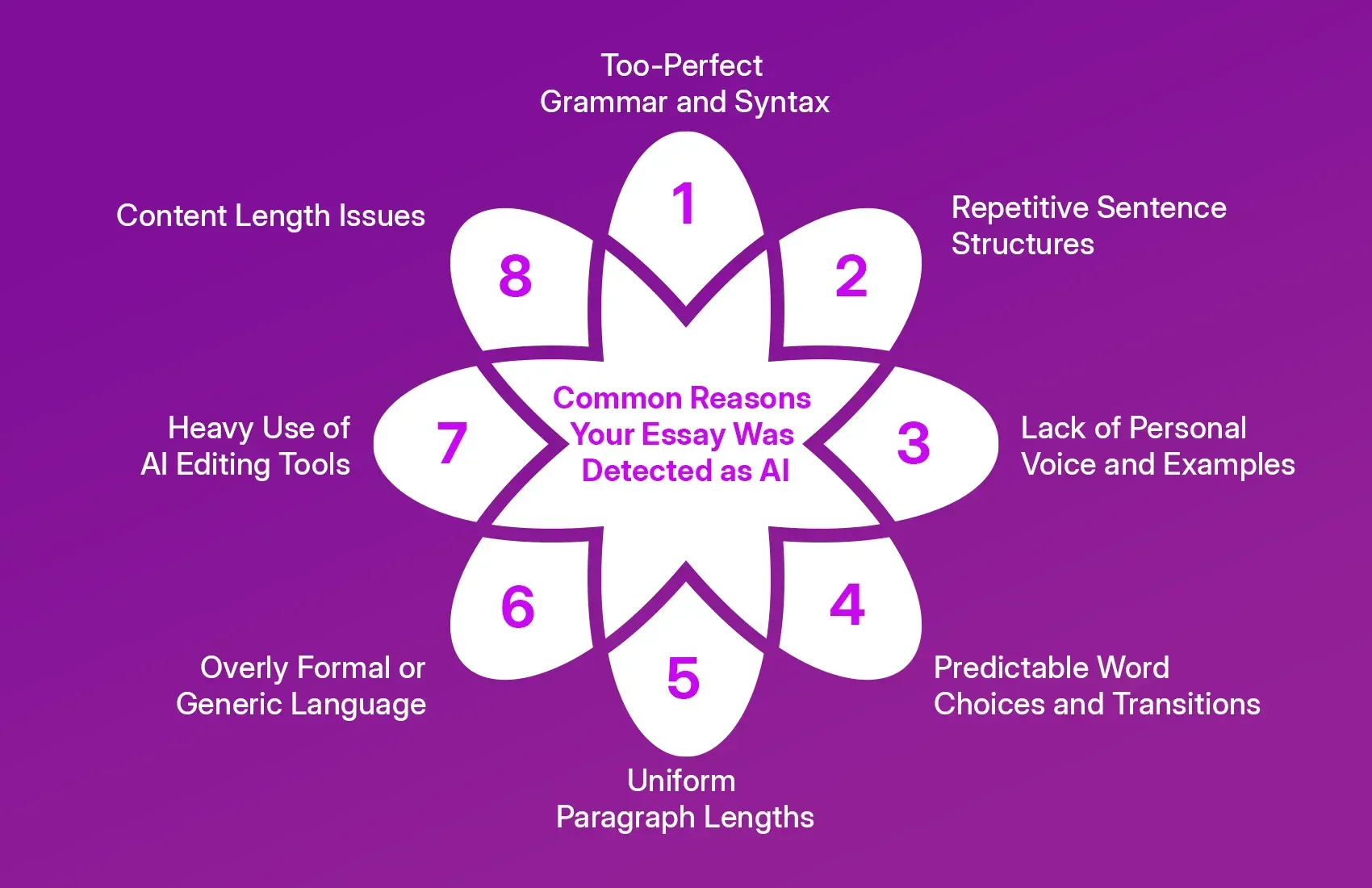 1. Too-Perfect Grammar and Syntax
Human writing invariably has small Faults like a missing comma in one place and a somewhat clumsy expression in another. If your paper is totally error-free about grammar, particularly after using grammar software for thorough editing, it might look more like AI output than real student writing.
1. Too-Perfect Grammar and Syntax
Human writing invariably has small Faults like a missing comma in one place and a somewhat clumsy expression in another. If your paper is totally error-free about grammar, particularly after using grammar software for thorough editing, it might look more like AI output than real student writing.
2. Repetitive Sentence Structures Is it the case that the structure of your sentences is mainly the same? Subject-verb-object, one sentence after another? AI normally gets caught up in repeating the same sentence structure and so do people, unless they are conscious about using different patterns. Knowing this gives you a chance to acquire the skill of not being recognized as an AI.
3. Lack of Personal Voice and Examples AI-generated content frequently comes across as unoriginal because it is drawing information from multiple sources, and at the same time, it has no personal experience. If your paper does not include individual narratives, distinctive viewpoints, or definite instances from your life, it will probably be perceived as lacking personality and might even be thought to be produced by AI.
4. Predictable Word Choices and Transitions Switch the listed phrases that Hint at formal discourse, such as "Furthermore," "In conclusion," "It is important to note," and "In today's society," into red flags. If you keep on using them, your text will sound impersonal. Their removal is a necessity for making your essay undetectable by AI.
5. Uniform Paragraph Lengths The uniformity in length and internal structure of every paragraph in your essay can set off the detection algorithms. Human authorship, on the contrary, leads to a more varied paragraph length depending on the complexity of the ideas presented.
6. Overly Formal or Generic Language Yes, academic writing must be formal, but there is a distinction between being appropriately formal and being unnaturally stiff. If your essay is such that, in case of replacement of a few words, it could easily fit any topic, then it is a problem.
7. Heavy Use of AI Editing Tools Using Grammarly or comparable tools is not considered cheating, but if you embrace all these suggestions, your writing will lose its original voice. The more you permit these applications to alter your phrases, the more your writing will resemble that one of a machine and the more probable it is that you will wonder "why is my essay detected as AI?".
8. Content Length Issues It is worth mentioning that extremely short pieces of writing often get identified by the detector more often than not due to the fact that there is not much data available for the detector to assess, and this leads to results that are mostly uncertain (and many times wrong). On the other hand, longer texts supply a greater number of patterns for the exact detection.
6 Actionable Tips: How to Not Get Detected by AI
Let's get down to the practical aspect and methods of making an essay undetectable by AI while keeping it of high quality and authentic. The implementation of these strategies will ensure that you do not get falsely reported by any AI detector. For additional techniques, explore these strategies to make your essay sound more human using intentional writing approaches.
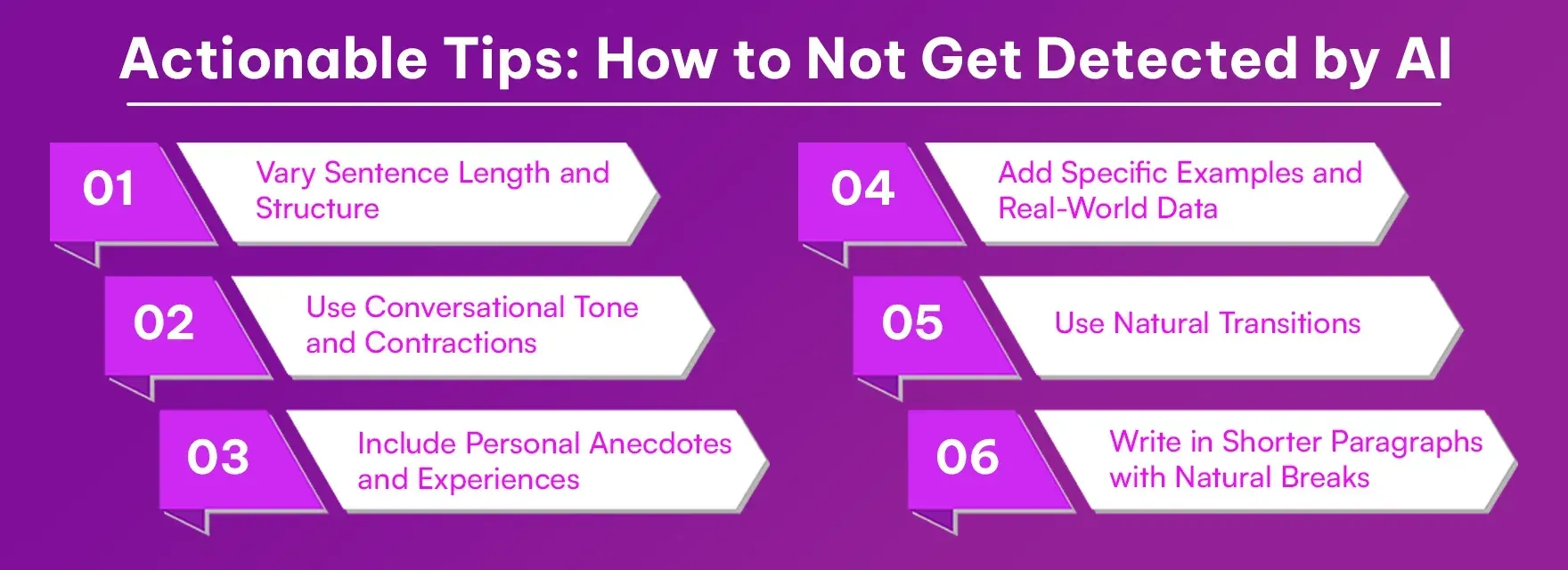 1. Vary Sentence Length and Structure (Critical for How to Make Your Essay Not AI Detectable)
In your writing, bring about a rhythm by interchanging short and lively sentences with longer and more complex ones
Parts of sentences can be put together for emphasis when necessary. This kind of variation is one of the most obvious signs of human writing and is crucial for getting undetected by AI.
Example transformation:
AI-like: "The study reveals very important findings, results are significant clear-cut. The results strongly point to apparent patterns."
Human-like: "The study was surprising; researchers were expecting a few minor changes when the results showed a complete flip from what was being expected. What was the most impactful? The spiky data story!
1. Vary Sentence Length and Structure (Critical for How to Make Your Essay Not AI Detectable)
In your writing, bring about a rhythm by interchanging short and lively sentences with longer and more complex ones
Parts of sentences can be put together for emphasis when necessary. This kind of variation is one of the most obvious signs of human writing and is crucial for getting undetected by AI.
Example transformation:
AI-like: "The study reveals very important findings, results are significant clear-cut. The results strongly point to apparent patterns."
Human-like: "The study was surprising; researchers were expecting a few minor changes when the results showed a complete flip from what was being expected. What was the most impactful? The spiky data story!
2. Use Conversational Tone and Contractions In case you are not writing for a very formal setting, it is advisable to use contractions (it’s, you’re, can’t) and a conversational tone without any fear. Academic writing does not necessarily need to be very mechanical.
3. Include Personal Anecdotes and Experiences Bring into play data from your life, witness views from your investigation, or one-of-a-kind viewpoints that only you could offer. Artificial intelligence is unable to duplicate your life stories or your special view on the issue. This thus raises the question of how to not be spotted by AI just be the real you.
4. Add Specific Examples and Real-World Data AI excels at making generalizations. Overcome this by using particular figures, real people's names, precise dates, and actual instances. Cite current happenings or particular articles. The more detailed you are, the more you will learn how to write your essay in such a way that it is not recognized by AI.
5. Use Natural Transitions (Key to How to Make Essay Not AI Detectable) Moreover, AI detection can be extremely difficult with such a minor change. So, before "Furthermore," one can use "What's more," "Beyond that," or "This gets even more interesting when...
6. Write in Shorter Paragraphs with Natural Breaks White space should not scare you. Shorter paragraphs are more readable and have a more dynamic feel. Divide the long texts into smaller pieces. Make use of paragraph breaks for signaling changes in your ideas, just like you would do if you were speaking and naturally pausing.
What To Do If My Essay Is Detected as AI
In case the very worst moment has struck you, and you are thinking, "My essay is detected as AI," the very first thing to do is to breathe. Being marked does not imply that you are the culprit by default. A number of universities are already realizing the problem of high false positive rates and having appeal procedures established.
Stay Calm: False Positives Are Common
Many students wonder whether teachers can detect ChatGPT-generated content and what methods they use beyond automated tools. Understanding the educator's perspective on detection can help you better prepare your defense and documentation.
Stay Calm: False Positives Are Common
In case the very worst moment has struck you, and you are thinking, "My essay is detected as AI," the very first thing to do is to breathe. Being marked does not imply that you are the culprit by default. A number of universities are already realizing the problem of high false positive rates and having appeal procedures established.
Document Your Writing Process
This is the strongest argument in your favor regarding the dilemma of "my essay is detected as AI" but it is still your own work. Collect all the evidence that supports your authorship:
- Save Drafts and Revision History: Google Docs keeps a record of version history automatically. Microsoft Word provides comparable functionalities. These time stamps and steps exhibit your mental evolution.
- Keep Research Notes and Outlines: Your first notes, documents with ideas, and research resources depict the behind-the-scenes work of the ultimate output.
- Use Tools Like Grammarly Authorship: A few writing tools have begun to provide authorship reports, which confirm the time and nature of your work on a document.
How to Appeal to Your Professor/Institution
The majority of educational institutions have official procedures for appeals. Schedule an appointment with your instructor or the appropriate administrator. Conduct the conversation in a manner that is professional and respectful, and not defensive.
What Evidence to Provide Get the whole lot:
- Original works with time marks
- Notes and plans for the research
- Images of the steps in your writing process
- Samples of your writing from the beginning of the course to demonstrate your unchanging style
- Any email exchange with your instructor while doing the writing
- Proof that you have explored the ways to prevent essay from AI detection and thus, no future problems would arise.
Understanding AI Detection Tools: Accuracy & Limitations
AI detection tools aim to determine if a text is authored by a human or an AI. They offer assistance, however, they are not infallible and occasionally produce erroneous results. To rely on them is to be misled, therefore, it is advisable to use them as a reference rather than a certainty.
Comparison of Major AI Checkers
Various AI detection software employ diverse methods and yield different outputs. The knowledge of these variations is necessary for mastering the art of writing an essay that cannot be detected by AI:
- Turnitin: Generally viewed as a more cautious approach, with a greater tolerance for flagging. Instead of an absolute yes/no, an "AI writing indicator" percentage is given. This is among the AI detectors that are most frequently utilized in academic institutions.
- GPTZero: Flagging has become more robust, resulting in a rise in false positives, but at the same time, the detection of AI-generated texts that were not initially caught has decreased. This method gives a thorough analysis of each sentence.
- Originality ai: However, marketed as a superior source of accuracy, it also has a higher price tag attached to it. It is the main device in the art of professional content creation instead of the schooling area.
Accuracy Rates and Error Margins
Independent testing suggests these ranges:
- Turnitin: ~75-80% accuracy
- GPTZero: ~70-75% accuracy
- Originality ai: ~80-85% accuracy
Nevertheless, these numbers are a result of supervised experiments. The actual accuracy might be less, particularly with the quick development of AI models. Therefore, these statistics give a reason why my paper is classified as AI even if you produced it the tools are just not accurate enough.
Why Different Detectors Give Different Results
Every AI detection tool has a unique dataset and algorithms for training. Consequently, a piece of writing may be tagged as 90% AI-written by one checker and only 20% AI-written by another.
Can AI Tools Generate False Positives?**
Without a doubt, and on a regular basis. The fundamental characteristic of probabilistic detection implies that false positives will always be there. It is not a matter of whether they happen or not, but rather how often, and the answer is much more often than most teachers are aware of. This is the main reason why AI is flagged in your essay, even though you wrote it yourself.
Why Institutions Are Reconsidering Certain AI Checkers
The bias against non-native speakers and the high false positive rates have led some universities to stop using AI detectors completely. Others have implemented policies where human judgment is required instead of just relying on automated detection. The trend of more cautious implementation is increasing as more false accusations are revealed.
How to Humanize AI Text Free
When you need to refine AI-assisted drafts or make formally-written content feel more natural, understanding the principles of humanizing AI-generated text becomes essential. Four fundamental approaches guarantee authenticity while maintaining quality:
Manual Humanization Techniques (Humanize AI Text Free)
- Add Personal Touch: Insert your own anecdotes, opinions, and observations. No form of AI can adapt to your special life experiences or individual perspective.
- Vary Sentence Rhythm: If you want to avoid your essay being recognized as AI written, then breaking it down into sections according to how the writer reads it aloud is one of the most important steps.
- Insert Minor Imperfections: Contribute some conversational turns, some contractions, or even a degree of informality when these sound appropriate. Purely perfect writing tends often to seem suspiciously overworked to those programs using AI for verification.
- Use Specific Details: Transform statements with little to no power or impact into an extra potent form using actual names or figures.
For readers seeking additional approaches, these simple humanization methods offer complementary techniques that work alongside the strategies above.
Free Tools to Humanize AI Text
So let's begin to give our computer-created writing some humanness using a thesaurus that can help (or prove to be harmful, taking care while making use of it):
- Manual editing with attention to perplexity and burstiness
- Using free paraphrasing tools selectively (not for entire essays)
- Reading text aloud and adjusting anything that sounds robotic
- Having a friend review for natural flow
The Right Way to Use AI Writing Assistants
When AI Use Is Acceptable vs. Prohibited
The specifics of this can vary greatly depending on the institution and even the individual professor. Grasping these limits can save you from falling victim to the situation where "my essay gets flagged as AI" becomes a reality for you. As a rule of thumb:
Usually Acceptable:
- Coming up with ideas
- Finding and discovering sources for research
- Checking grammar and spelling
- Assistance in translation for people who are not native speakers
- Creating practice questions or study materials as a result of generation
Usually Prohibited:
- Generating complete essays or significant parts
- Writing main sentences or thesis statements
- Making particular arguments or assessments
- Delivering content ready for final submission without disclosure
How to Use AI Ethically
Brainstorming and Outlining: Utilize AI to generate ideas or arrange your thoughts, however, take the responsibility to work out those ideas. When incorporating AI assistance into your workflow, understanding techniques for making AI content undetectable helps ensure your final work maintains academic integrity.
Research and Fact-Checking: AI can assist you in finding pertinent sources or authenticate the information, but it is still necessary for you to go through and grasp those sources.
Grammar Correction Only: Employ the instruments to detect errors and enhance the fluency, however, don't follow every recommendation without questioning it. Keep your voice in order not to have an AI detector mark your work as a detection. Throughout this process, remember that avoiding plagiarism remains paramount—AI should enhance your original work, not replace it.
Bypass AI: Your Solution for Natural-Sounding Content
AI detection tools aim to determine the authorship of a text, whether human or AI. They are beneficial, but can still sometimes be inaccurate, producing incorrect results. Therefore, it is necessary to consider them as a reference rather than a certainty.
What Is Bypass AI and How Does It Work?
Bypass AI is a professional instrument that focuses on transmuting AI-generated or heavily modified text into something that seems to be written by a human.
Key Features
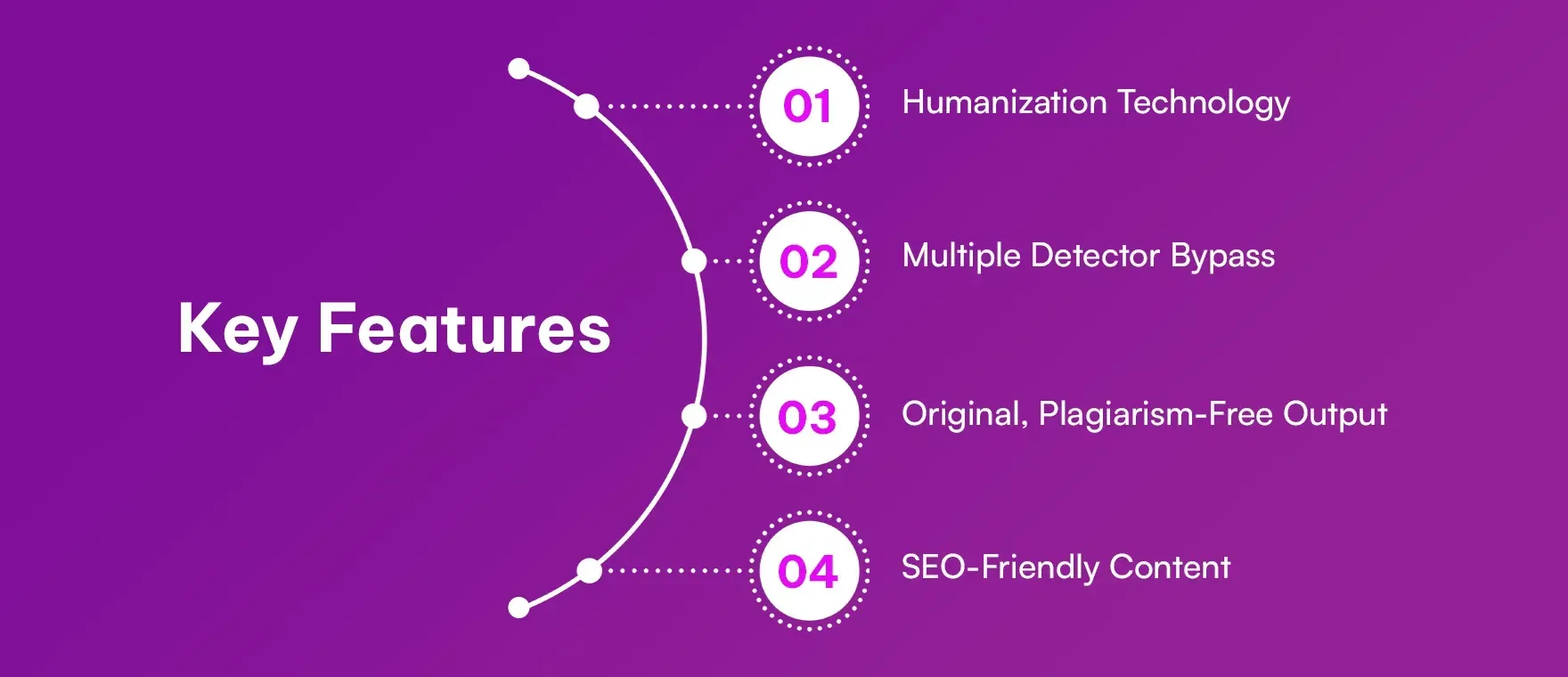
- Humanization Technology: Bypass AI uses advanced algorithms that recognize the characteristics of AI writing and eliminate them systematically.
- Multiple Detector Bypass: The application was intentionally created in a way to escape from being found out by the prominent AI checker platforms that include Turnitin, GPTZero, Originality ai, Winston AI, and Content at Scale, among others.
- Original, Plagiarism-Free Output: Bypass AI is different than basic paraphrasing tools in that it creates completely new texts that will not be flagged by plagiarism detection systems, yet they will still communicate your message.
- SEO-Friendly Content: This software is for the people who create buzz and need their keywords to be on the top list when they search for them.
Who Benefits from Bypass AI?
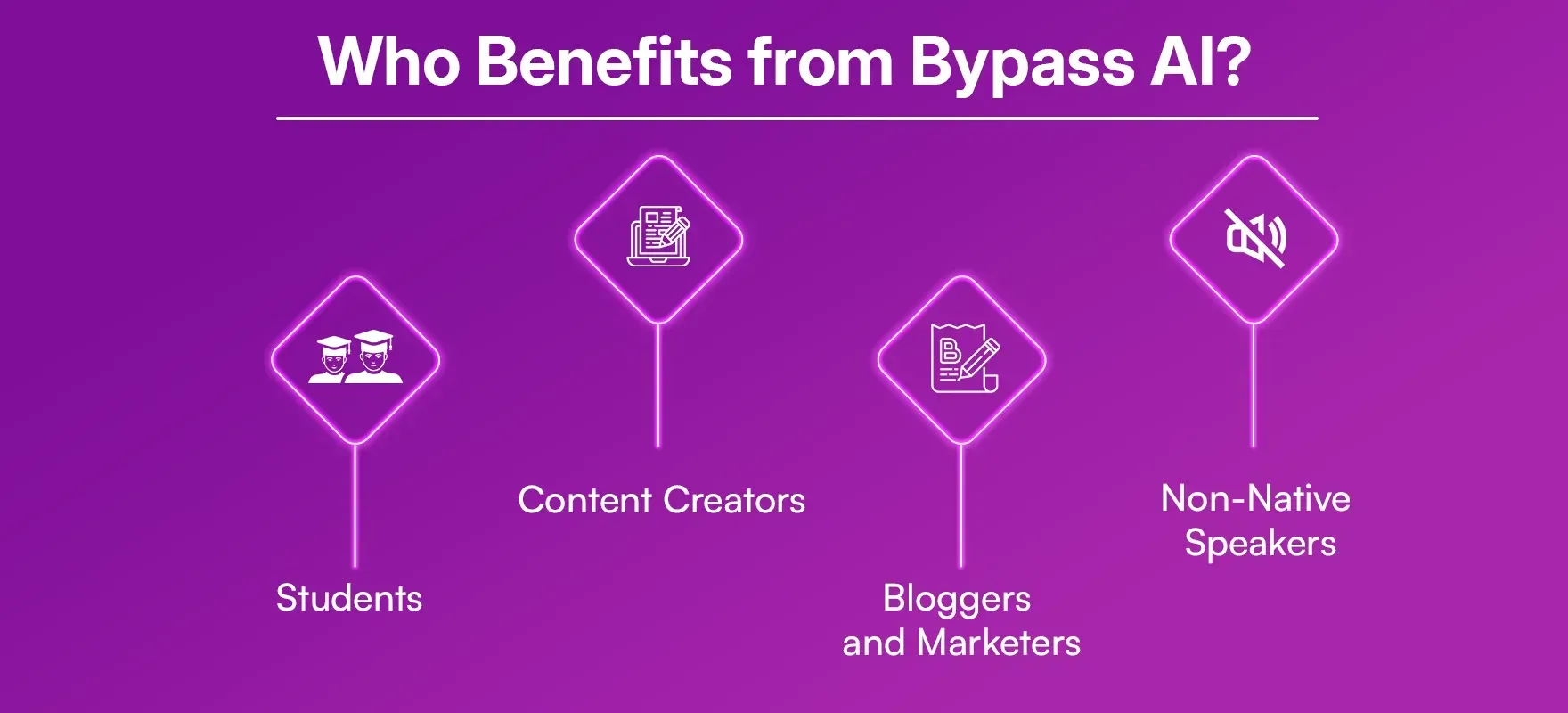 Students: Bypass AI is a tool to help those writers who have produced original works but are afraid of getting their works unrightfully flagged due to the use of grammar correction tools or the application of formal writing styles.
Content Creators: The users' group consists of bloggers, copywriters, and marketing professionals that require the aid of AI to write drafts. In addition, due to the use of AI the text can be edited for the purpose of humanization to be put up for publication. The group member's, however, do not need to care about AI checker tools.
Bloggers and Marketers: One thing: it is wholly erroneous to use the term "reading" in this case. The explanation to this is even simpler: the machine produces an output that is utterly displaced and uninformative but has just decided it is different.
Non-Native Speakers: The tool can be used by international students who are subjected to false positives to disguise their formal writing style in such a way that AI checkers would judge it as being more human-like.
How to Use Bypass AI Effectively (Step-by-Step)
Have you ever read about an artificial intelligence like OpenAI and tried to turn it nature-like? Now, whatever the correct answer to that question might be, let me show you how to get to it. As an author or creator, your work may be a success if you have accurate knowledge about your target audience and may better formulate the tone of your message. Enable it to rewrite the paragraph: AI must be such that it should make people believe that the text was composed and rewritten using the content field, and not like AI. Test it if you must: Do a good scan of the whole text out there to see the softened copies and grade attained since those activities help avoid detection.
Pricing and Plans
Bypass AI predominantly provides prices that are categorized according to levels:
Free tier: monthly allowance of limited words that can be used for testing (recommended for those who are looking for "humanize AI text free".
Basic plan: moderate word limits through a monthly subscription.
Premium plan: more words and extra features.
Enterprise: personalized offerings for agencies and universities.
To know the latest updates on pricing and plans, check out Bypass AI
Conclusion
AI detection in academic writing is still a developing query, with both advantages and challenges for students and educators. Comprehending the functioning of these tools and being authentic are the major means by which writers can reduce the number of false positives without compromising their academic integrity.
However, the secret to getting over problems related to AI detection is to create a real writing persona. By putting down their own ideas, giving their personal views, and making use of AI in a good way, writers can create an output that is nothing but human creativity and is easily distinguishable from machine-written text.
FAQs
1. Can Turnitin detect AI-written essays?
Yes, Turnitin can spot AI-written text using its AI checker, but it’s not always right. It shows a percentage of AI use, which can include mistakes or false flags.
2. Why is my essay marked as AI when I wrote it myself?
It may look AI-like if your writing is too perfect, formal, or has repeated patterns. Using too many grammar tool fixes can also make it seem computer-generated.
3. How accurate are AI detectors?
AI detectors are only about 60–85% accurate. This means they can be wrong quite often, sometimes marking real human writing as AI.
4. Will Grammarly make my essay look AI-written?
No, Grammarly itself won’t. But if you accept all its suggestions, your writing might look too smooth and robotic, which could trigger AI detectors.
5. What should I do if I’m wrongly accused of using AI?
Stay calm and show proof like drafts, notes, or document history. Most schools understand false AI flags happen and will review your evidence.
6. Can professors ignore AI detection results?
Yes, professors can decide for themselves. AI results are just one clue teachers also look at your writing style and previous work.
7. Are AI detectors unfair to non-native speakers?
Yes, they can be. Non-native writers often use more formal language, which detectors may mistake for AI writing.
8. How can I prove I wrote my essay myself?
Save all drafts and notes, and show how your essay developed. Being able to explain your ideas clearly also helps prove it’s your work.
9. Is it okay to use AI for research help?
Yes, if your school allows it. You can use AI to find sources or ideas, but the main writing should be your own.
10. What AI detection percentage is okay?
It depends on your school. Some flag essays over 20%, while others use 40–50%. Most now focus on context, not just numbers.
Recent Blogs